Drainage Solutions in Northern California
Available 24 hours, 7 days a week — including weekends.
Poor Drainage Causes Damage That Gets Worse Every Wet Season
Lee One Construction is a licensed excavation contractor serving Anderson, Redding, and Northern California since 2020, with 25 years of hands-on field experience designing and installing drainage systems for residential, rural, and commercial properties. Drainage solutions cover three interconnected categories of work: surface water management, which controls where rainfall goes once it hits the ground; subsurface water redirection, which intercepts water that has entered the soil and carries it away from structures and septic systems; and integrated lot drainage, which coordinates both into a single engineered water management plan for the property. This is licensed contractor work requiring site knowledge, grading equipment, and an understanding of how water moves through specific soil types — it is not a weekend DIY project, and a job done incorrectly typically costs significantly more to fix than it would have cost to do right the first time.
Five situations consistently tell property owners they have a drainage problem that needs professional attention. Standing water that remains on lawns, driveways, or near structures for more than a day after rainfall indicates the soil can't absorb or shed water fast enough — and each wet season without a fix compounds the saturation. Foundation seepage or moisture intrusion along basement walls or crawl space perimeters is a sign that hydrostatic pressure is building against the structure; left unaddressed, that pressure cracks concrete and destroys vapor barriers. Septic field saturation shortens the life of a leach field measurably — a field that spends weeks waterlogged each winter is a field that is failing ahead of schedule, and a full replacement runs well into five figures. Active erosion on slopes or hillsides removes the soil layer that holds everything in place; once a channel starts cutting, it widens with each storm. And driveway or structure runoff that creates pooling, undercutting, or access problems doesn't stabilize on its own — it progresses until the damage forces action at a higher cost.
Drainage problems don't hold steady when they go unaddressed — they worsen. Clay soils compact further as they're repeatedly saturated and dried, reducing what little drainage capacity they had. Surface channels erode wider with each passing storm, and water that previously pooled harmlessly in one location finds new paths to foundations, crawl spaces, and leach fields as the landscape shifts. A drainage problem that surfaces in year one of ownership and is ignored through two or three wet seasons typically requires significantly more excavation and pipe work to correct than it would have at first appearance — because the secondary damage it causes in the meantime has to be corrected at the same time. The clear next step for any property showing drainage stress is a licensed site assessment, where the drainage system that actually fits the property can be scoped from the ground up.
Understanding Your Drainage Problem Is the First Step to Fixing It
Drainage problems in Northern California fall into three general categories — surface water, subsurface water, and integrated lot drainage — and knowing which category applies is what determines the right solution, the right equipment, and the right scope of work before a contractor touches the ground.
Surface Drainage — Swales, Berms, and Channel Grading
Surface drainage systems intercept and redirect water before it enters the soil: graded swales that channel runoff away from structures, earthen berms that divert sheet flow across open terrain, and channel grading that gives water a controlled path to a safe discharge point. Surface drainage is often the most cost-effective first intervention on properties where water accumulates on sloped or flat terrain, because it can prevent saturation before it starts. But it must be engineered to the property's actual topography — a swale that redirects water toward a neighboring parcel creates liability, and a berm placed without accounting for overflow creates new ponding at the berm's end. Getting the grades right is the job.
Subsurface Drainage — French Drains, Perforated Pipe, and Catch Basins
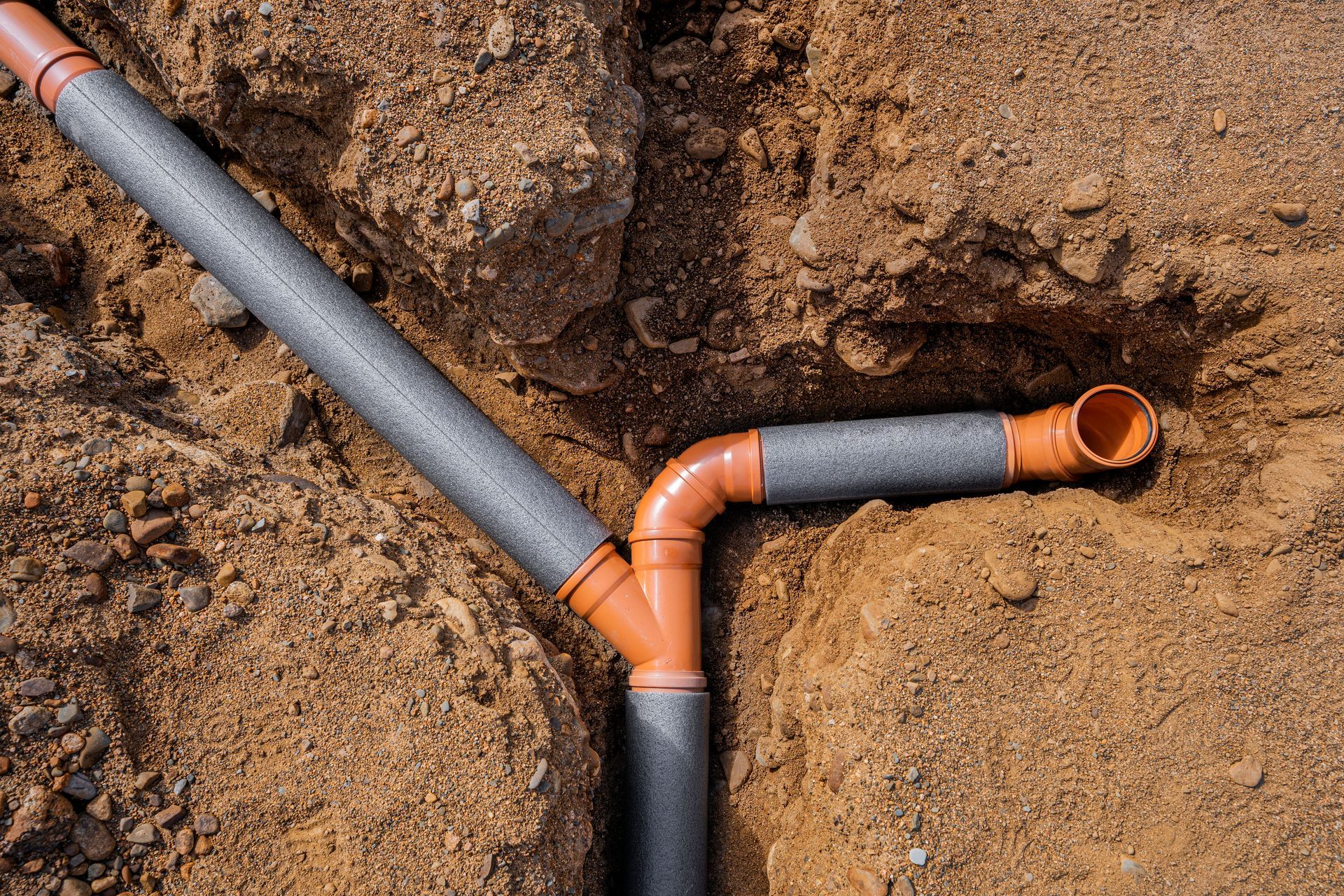
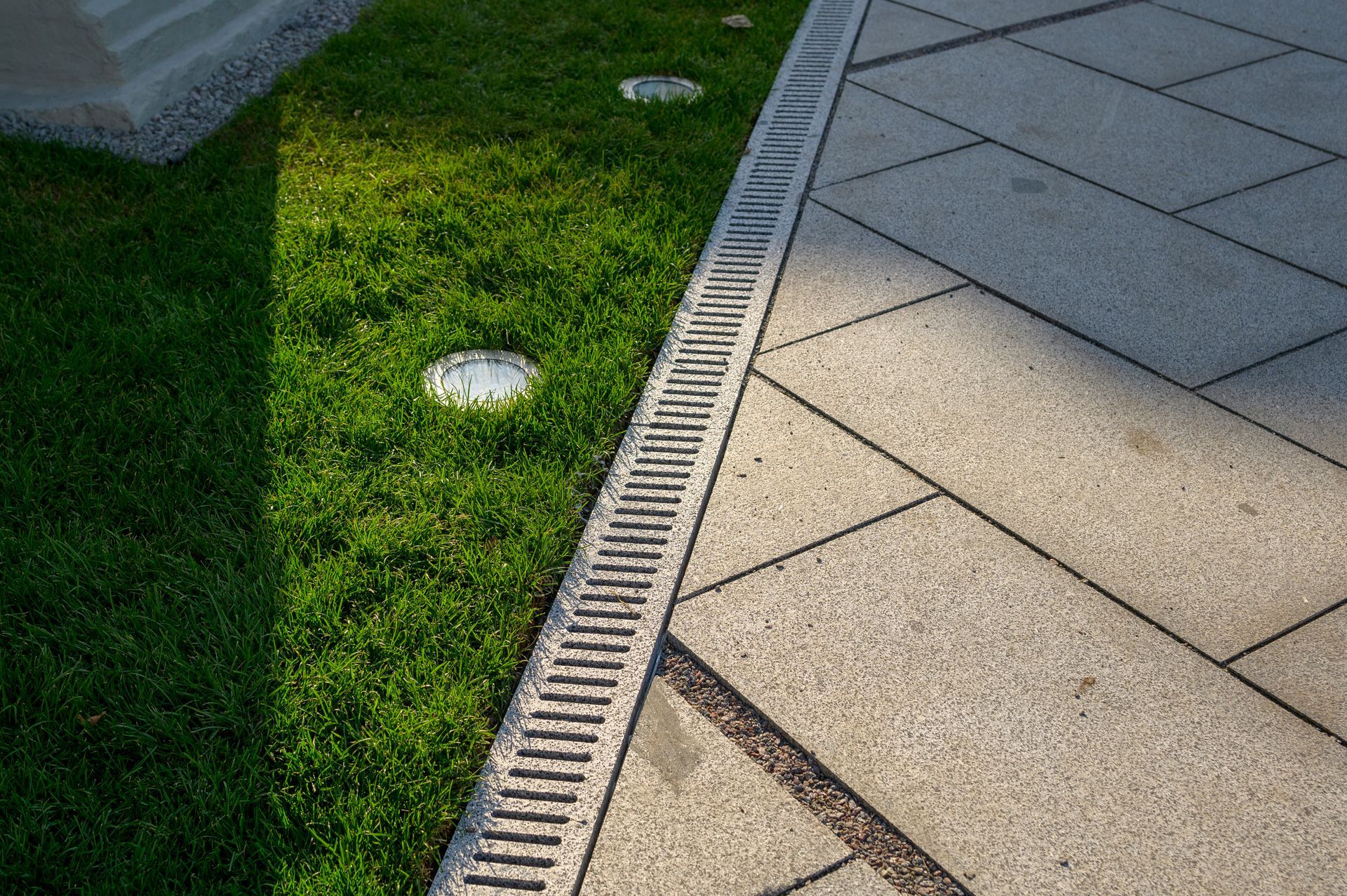
Subsurface drainage intercepts water that has already entered the soil profile or collects below grade. French drains — perforated pipe set in gravel-filled trenches — relieve hydrostatic pressure that builds against foundations and retaining walls when soil becomes saturated. Catch basins collect surface water at low points before it has a chance to pool, and subsurface collection lines carry water away from septic leach fields before the field zone becomes saturated. Subsurface drainage is non-negotiable when foundation moisture or septic field saturation is already occurring. Surface re-grading alone won't solve a problem that originates below the topsoil — it requires excavation into the soil profile and the installation of a system designed to move water where the grades and soil conditions allow.
Integrated Lot Drainage — Full-Property Water Management for New and Existing Builds
Larger parcels and new lot developments require a coordinated drainage plan that accounts for all water entry points across the property, soil absorption rates by zone, legal discharge locations, and the interaction between surface drainage systems, subsurface collection lines, and the septic leach field. For developers, builders, and land buyers, this means the drainage plan needs to be done before construction starts — not retrofitted after a structure is built and grades are fixed. A drainage system added after a foundation is poured costs significantly more in both labor and disruption than one scoped into the site plan from the beginning. Every property has specific conditions — soil type, slope, seasonal water volume, proximity to natural drainage channels — that determine which system or combination of systems actually works. A licensed site assessment is how that determination gets made accurately.
Shasta County Drainage Is Not a Generic Problem — It Needs Local Experience
Shasta County's drainage conditions are shaped by a Mediterranean rainfall pattern that has no equivalent in coastal or Central Valley markets. Most of the region's annual precipitation falls in concentrated winter months, then stops entirely — which means soils go from bone-dry and surface-hard to completely saturated in a short window, often within a single storm system. Clay-heavy soils across the valley floor and foothill benches don't absorb water the way sandy loam does; water sits on the surface, exerts lateral pressure against foundations and retaining walls, and saturates leach field zones that spent the entire dry season without any moisture. Creek systems and seasonal drainages that cross many rural Shasta County parcels can reverse the expected drainage direction during storm events, turning what looked like natural low-point drainage into a water entry problem. A drainage design that doesn't account for that seasonal dynamic and soil behavior will underperform from the first wet season.
Post-fire drainage is a specific and serious challenge for properties in or near wildland-urban interface areas across Shasta County and surrounding regions. When vegetation is removed — by fire or by defensible space clearing — the root systems that previously held soil together and absorbed water are gone. Bare hillside soils, particularly those with the volcanic substrate or decomposed granite common in parts of Shasta County, become highly erosive under the first significant rainstorm. Sheet erosion accelerates, gullies form faster than most property owners expect, and the runoff volume reaching low-lying structures and leach fields increases sharply. Working with a contractor who has operated in this specific terrain matters: a drainage design built on a generic template won't account for how Shasta County's actual seasonal hydrology behaves. When Anderson and Redding property owners call Lee One Construction for drainage solutions, the site assessment always starts with the same question — where does the water come from, and where does it go when it can't go where it's supposed to?
Common Drainage Questions for Northern California Property Owners
What causes standing water on rural properties in Northern California after it rains?
Standing water on Northern California rural properties is almost always caused by one of three conditions: clay-heavy soil that absorbs water slowly, inadequate surface grading that lets water pool rather than shed, or a blocked or absent subsurface drainage system. Identifying which condition applies requires a site assessment — all three have different solutions and different costs.
Is a French drain enough to fix hillside erosion on my Shasta County property?
A French drain handles subsurface water pressure but won't stop surface erosion on its own. Hillside erosion in Shasta County — especially on fire-cleared slopes with volcanic or clay soil — typically requires a combination of surface channel grading, erosion control material, and a subsurface collection system working together. A French drain alone addresses only part of the problem.
Does drainage work in Shasta County require a permit?
Most subsurface drainage installations on private residential property in Shasta County do not require a separate grading or drainage permit for standard French drains and surface swales. However, work that involves altering a natural drainage channel, discharging water to a county road right-of-way, or affecting a regulated waterway does require county approval. Lee One Construction confirms permit requirements before any drainage work begins.
Can poor drainage damage my septic system's leach field?
Yes. When surface or subsurface water saturates the soil around a leach field, the field loses its ability to absorb and treat effluent. A saturated leach field causes septic backups, system failure, and — in serious cases — a full leach field replacement that costs significantly more than the drainage correction would have. Drainage and septic design must account for each other from the start.
How long does a drainage installation typically take on a residential property in Northern California?
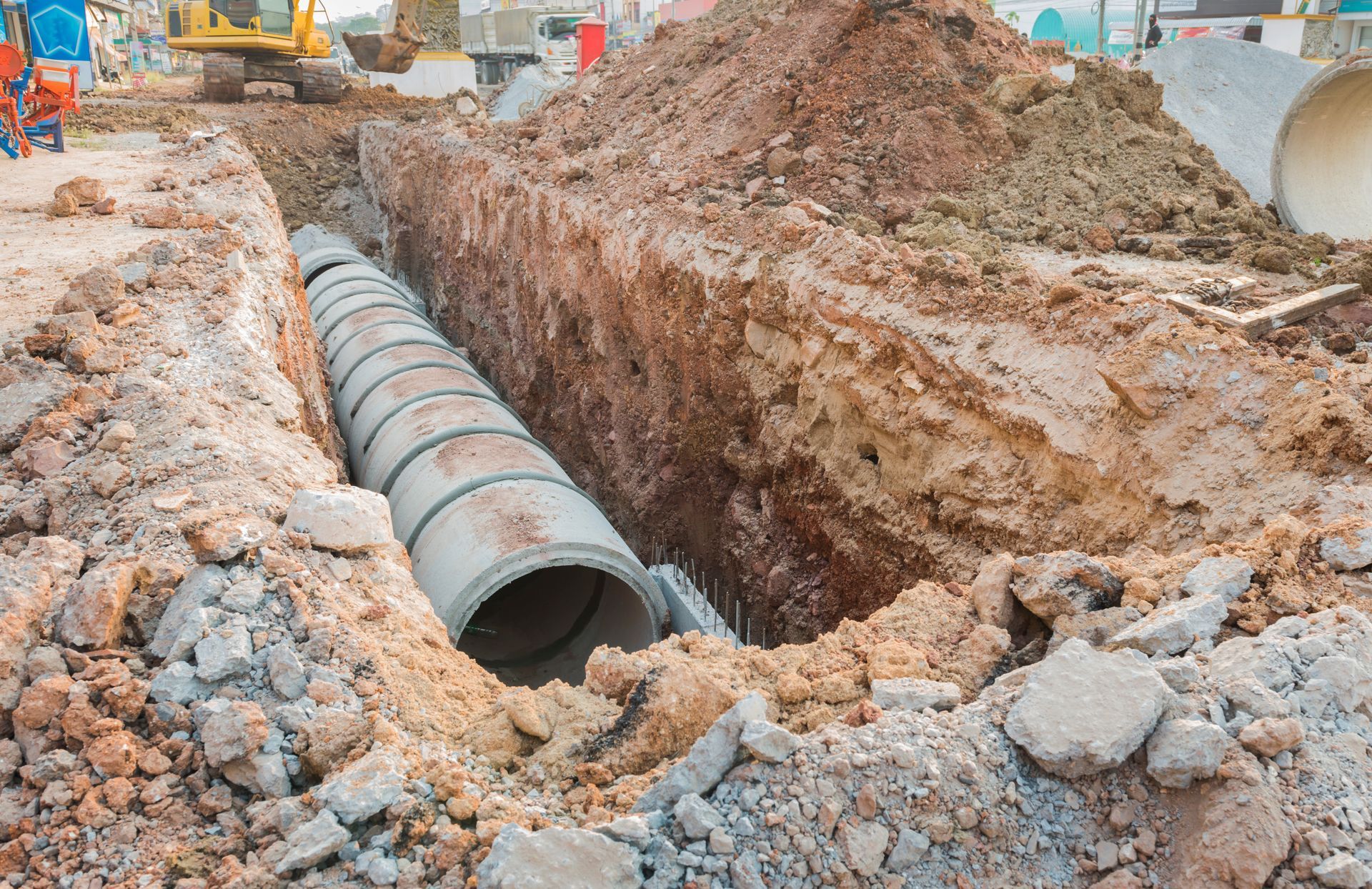
A standard residential drainage installation — one or two French drains, a catch basin, and surface re-grading — typically takes two to four days from excavation through compaction and surface restoration. More complex integrated drainage plans involving multiple collection lines and discharge infrastructure can run five to eight days. Lee One Construction provides a site-specific timeline before work begins.
Licensed Drainage Solutions Available Across Northern California
A site assessment can be booked the same day — no appointment required. Lee One Construction is based in Anderson, CA, which means our crew can reach most of the Northern California service area faster than contractors working out of the region. If you have a drainage emergency or standing water that needs eyes on it today, call now.
Lee One Construction holds CSLB #1063228 and carries full contractor's insurance. Call or send a message and we'll get back to you with a clear scope and timeline for your property.